Cute Monsters 3D SVG: A Designer's Review
When I first pulled up the Cute Monsters 3D SVG Multilayer Files on my screen, my immediate reaction wasn't just about the cuteness factor; it was about dimensionality. As a designer who spends half their life staring at flat vector lines and the other half troubleshooting thread breaks, I look for files that translate well from digital concept to tactile reality. This specific set, sized at a generous 290mm height by 250mm width (roughly 11.4 x 9.9 inches), immediately struck me as a statement piece. While the product category lists this under Wall Decor and Laser Cutting, my mind instantly went to how these layered shapes could be reimagined for high-end custom apparel and textured handmade products.
The Visual Personality and Layout
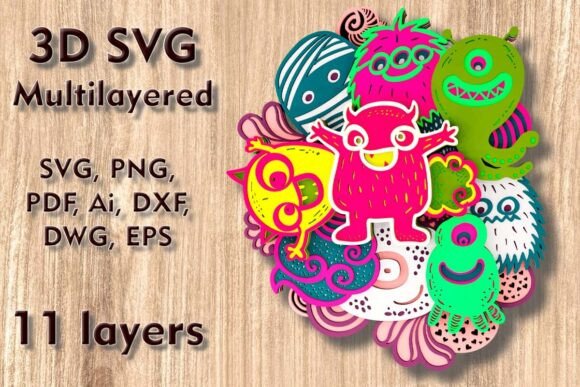
The mood here is playful yet sophisticated enough for boutique branding. The "3D" aspect of these files relies heavily on the multilayer structure, which is a goldmine for embroidery designers who understand depth. In a laser cutting context, these layers create physical shadow and separation. In embroidery, we mimic this through stitch types and stacking. The layout features distinct segments that suggest a natural flow for applique design work. You aren't just stitching a flat monster; you are building a character.
The shape language is rounded and friendly, avoiding sharp, aggressive angles that can be tricky to cover with satin stitch columns without puckering. However, the description warns us to be careful when reducing the design due to thin elements. This is a critical observation. If you plan to shrink this for a baby onesie or a small pocket logo, those delicate connecting lines between layers might vanish or become unstable under the needle. For full-size projects like a large tote bag or a pillow cover, the scale is perfect for showcasing detailed fill stitch textures.
Real-World Application: The Boutique Sweatshirt
Let's walk through a real scenario. Imagine a client wants a limited-run collection of oversized sweatshirts for a local craft fair. They want something that pops but feels soft to the touch. I would take the Cute Monsters 3D SVG Multilayer Files and adapt them for a layered applique approach. Instead of digitizing the entire monster as one dense block of stitching, I would use the SVG layers as templates for fabric cutouts.
By using a contrasting fleece or felt for the base layer and a smoother cotton for the top details, you recreate that "3D" laser-cut effect with thread and fabric. The result is a finished product that looks expensive and thoughtful. Customers at a craft fair are drawn to texture; they want to touch the item. A flat digital print doesn't offer that engagement, but a multi-layered embroidered monster does. This approach elevates a simple sweatshirt embroidery job into a signature small shop product that can command a higher price point.
Navigating Fabric and Hoop Challenges
While the potential is high, practical execution requires caution. The sheer size of this design (nearly 12 inches tall) means you cannot simply hoop it up on a standard machine without planning. You need to confirm your maximum hoop size compatibility. If your machine doesn't support a hoop this large, you will need to utilize a "hoop-and-rehoop" method or split the design, which requires precise alignment marks in your digitizing software.
Fabric choice is equally vital. On stretchy fabrics like jersey knits, a design of this magnitude needs robust stabilization. Without a heavy-duty cut-away stabilizer, the weight of the threads and fabric layers will cause the garment to sag or distort over time. Conversely, on thick materials like denim tote bags or canvas aprons, the design sits beautifully, but you must watch your stitch density. If the layers overlap too much in the digitized version, the needle penetration can become excessive, leading to broken needles or bird-nesting on the underside.
Also, consider the surface. While great for flat items like tote bag designs or pillow covers, applying this to a curved surface like a cap would be nearly impossible without significant distortion. The wide footprint simply doesn't conform to the front panel of a standard hat. Stick to flat or gently curved surfaces for the best results.
Commercial Viability and Brand Consistency
For Etsy sellers and creative entrepreneurs, consistency is key to building trust. Using a cohesive set of characters like these monsters allows you to create a recognizable brand identity. Whether you are making holiday embroidery gifts in December or baby embroidery items for a spring collection, the style remains consistent. This visual recognition helps buyers remember your shop.
However, before listing these as design assets or selling finished goods, you must verify the licensing terms. Just because a file is available for purchase doesn't automatically grant commercial rights for unlimited sales. Check if the license covers physical goods versus digital resale. If you are selling the digital embroidery file itself, ensure the original creator permits redistribution. If you are selling the stitched item, most licenses allow this, but it is always safer to read the fine print to protect your craft business.
Designer Notes for Success
To get the most out of the Cute Monsters 3D SVG Multilayer Files, I recommend a few preparatory steps. First, never skip the test stitch. Run the design on a scrap piece of the actual fabric you intend to use. This reveals how the thread colors interact with the material background. A color that looks vibrant on screen might disappear against a dark navy fleece.
- Check Contrast: Ensure there is enough contrast between the different layers so the 3D effect is visible after stitching.
- Review Density: If you are digitizing this yourself from the SVG, keep satin stitches under 7mm to prevent looping, and use fill stitches with appropriate underlay for stability.
- Mockups: Create black-and-white mockups to check the readability of the shape without relying on color cues.
- Wash Testing: Since these are likely for wearable items or home decor that gets used, wash your test sample to ensure the layers don't peel or fray.
In conclusion, while these files are marketed for laser cutting and wall decor, their structural integrity makes them a versatile candidate for ambitious embroidery projects. With the right fabric, proper stabilization, and a keen eye for layering, you can transform these vectors into charming, tactile treasures that resonate with customers looking for something unique and handmade.