Rainbow 3D SVG Multilayer Laser Cut File Review
As a designer who spends most of my day toggling between digitizing software and physical stitching, I approach new assets with a healthy dose of skepticism. We often see files that look stunning on a screen but fall apart the moment the needle hits the fabric. Today, I am evaluating the Rainbow 3D SVG Multilayer Laser Cut File. While the product metadata explicitly categorizes this under Wall Decor and Laser Cutting, my interest lies in its potential adaptation for high-end machine embroidery design projects. Can a file built for layered acrylic or wood translate into a compelling stitched finished product? Let's dig into the practical realities of using this asset in a real-world craft business.
First Impressions: Mood and Structural Potential
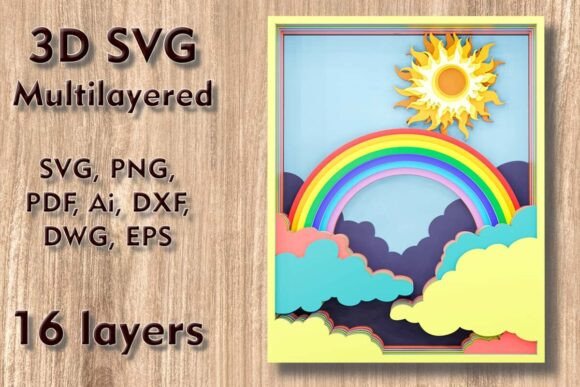
Upon opening the file, the first thing that strikes me is the architectural nature of the layout. The description notes 16 layers, which immediately signals depth and complexity. In the world of laser cutting, this creates a shadow-box effect; in embroidery, this suggests a rich opportunity for varied stitch density and texture mapping. The mood is undeniably cheerful yet structured, making it a versatile candidate for modern nursery decor or boutique branding.
The dimensions are listed as 250mm height by 200mm width (approximately 9.9 x 7.9 inches). This is a substantial size. For an embroiderer, this isn't a quick pocket logo; it is a statement piece. The visual personality of the rainbow motif, when broken down into multilayered segments, offers a chance to play with gradients not just through thread colors, but through actual physical layering if one were to combine embroidery with appliqué techniques. However, the warning in the description is critical: "be careful in reducing the design, consider thin elements." This is the first red flag for anyone planning to shrink this for a cap or a small embroidered patch.
Real-World Application: The Custom Tote Bag Scenario
To truly test the viability of this digital embroidery file concept, I envisioned a specific client project: a custom organic cotton tote bag design for a local artisan market. The goal was to create a handmade product that felt premium enough to justify a higher price point.
If I were to adapt the Rainbow 3D SVG Multilayer Laser Cut File for this purpose, I would treat the 16 layers as distinct color blocks. Instead of a flat fill, I would assign different stitch types to simulate the laser-cut depth. The outer layers could utilize a tight satin stitch for definition, while the inner layers might benefit from a textured fill stitch to add volume. On a sturdy canvas tote, this design would shine. The large surface area accommodates the 9.9-inch height without crowding, allowing the intricate details of the multilayer structure to breathe.
However, the execution requires foresight. A customer reacting to this bag wouldn't just see a rainbow; they would feel the texture. If the transition between the 16 layers is too abrupt or the thread colors lack sufficient contrast, the 3D effect gets lost, and it just looks like a busy, confusing mess. For a successful Etsy seller, the difference between a best-seller and a return often lies in this clarity. The design demands precise color selection—perhaps moving away from standard primary rainbow hues to a more sophisticated pastel or neon palette to enhance the perception of depth.
Navigating Fabric Challenges and Hoop Limitations
While the tote bag scenario is promising, we must address where this design could fail. The sheer scale of the file means it will not fit in a standard 4x4 hoop. You are looking at needing a large hoop, likely 8x8 or larger, depending on your machine's capability. If you attempt to force this onto a sweatshirt embroidery project without checking your hoop size, you will run into immediate registration issues.
Furthermore, the warning about "thin elements" is paramount when dealing with stretchy fabrics. If you try to apply this to a thin jersey baby embroidery item, the fabric may pucker under the weight of so many layered stitches. The stabilizer choice becomes non-negotiable here; a heavy-duty cut-away stabilizer would be essential to support the structural integrity of 16 distinct layers. On textured fabrics like terrycloth towels or wool blankets, those thin elements mentioned in the product specs might get swallowed by the pile, rendering the detailed layering invisible.
Curved surfaces present another hurdle. Attempting this on a baseball cap is ill-advised unless the design is significantly simplified. The curvature of the cap combined with the density of a multilayer design could lead to distortion, where the rainbow arcs no longer align correctly. For holiday embroidery gifts like pillow covers, flat weaving is key, but even then, one must consider how the back of the embroidery looks if the item will be handled frequently.
Commercial Value and Brand Consistency
For commercial embroidery professionals, the value of a design like the Rainbow 3D SVG Multilayer Laser Cut File lies in its uniqueness. In a saturated market of flat vector rainbows, a design that implies dimensionality stands out. It elevates the perceived value of the custom apparel or home good. When a buyer sees a product with this level of apparent complexity, they associate it with higher craftsmanship, which builds customer trust and allows for better pricing margins.
However, consistency is key. If you are building a brand around minimalist aesthetics, this busy, 16-layer design might clash with your existing design assets. It fits best in shops focusing on maximalist, colorful, or whimsical themes. For printable mockup creation, this file offers excellent visual interest, provided the renderer can accurately depict the simulated depth of the layers.
Practical Designer Notes for Implementation
Before committing this design to a client's order, there are several critical steps every responsible maker should take:
- Test on Scrap Fabric: Never skip this. Stitch the design on the exact same fabric weight and type you intend to sell. Watch how the 16 layers interact.
- Check Thread Contrast: Ensure adjacent layers have enough tonal difference to maintain the 3D illusion. Low contrast will flatten the design.
- Review Stitch Density: Fifteen or sixteen layers can create a very stiff, cardboard-like finish if the density is too high. You may need to manually reduce fill percentages in your editing software.
- Inspect Small Details: Zoom in on the thinnest parts of the vector. If they are too narrow for a satin stitch column, they will break or look ragged.
- Verify Licensing: Since this originates as a laser cut file, confirm the license terms regarding adaptation for embroidery. Some creators restrict modifying the file type or selling it as a new digital product.
- Consider Washing: Products that need frequent washing, like kitchen towels or baby clothes, may suffer if the dense stitching causes excessive puckering over time.
In conclusion, the Rainbow 3D SVG Multilayer Laser Cut File is a fascinating asset that bridges the gap between laser fabrication and textile art. While it requires careful handling regarding size, fabric choice, and stitch management, its potential for creating standout small shop products is significant. It is not a plug-and-play solution for every project, but for the observant designer willing to adapt its layered logic to the constraints of thread and fabric, it offers a unique pathway to creating memorable, high-value handmade goods.