Lighthouse 3D SVG Multilayer Laser Files Review
As a designer who spends more time staring at stitch maps and material samples than I do sleeping, I approach every new design asset with a mix of curiosity and skepticism. When I first pulled up the Lighthouse 3D SVG Multilayer Laser Files, my initial reaction was one of visual appreciation. The coastal theme is timeless, evoking a sense of calm and nostalgia that resonates deeply with customers looking for handmade products with soul. However, seeing a vector file on a screen is vastly different from translating that vision into thread and fabric. While this product is marketed primarily for Laser Cutting and Wall Decor, my mind immediately went to work imagining how these layered shapes could be adapted or utilized in a high-end embroidery project.
Visual Personality and Design Mood
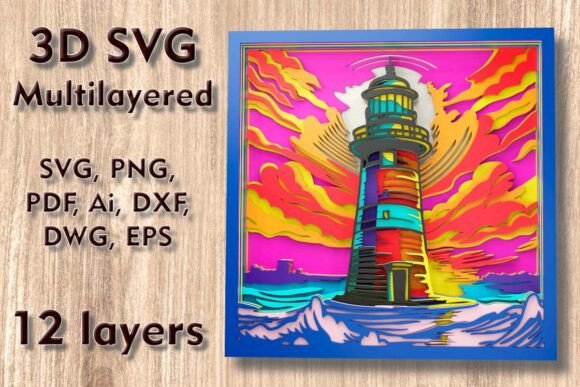
The first thing that strikes you about this design is its structural integrity. Even as a digital file intended for layering materials like wood or acrylic, the silhouette of the lighthouse is strong and recognizable. In the world of machine embroidery design, a clear silhouette is half the battle won. The mood here is distinctly nautical but refined; it avoids the cartoonish traps that often plague seaside motifs. This makes it an excellent candidate for boutique branding or upscale custom apparel. The "3D" aspect mentioned in the title suggests depth, which in embroidery terms translates beautifully to varied stitch density and texture. If you were to digitize this or adapt existing layers for stitching, the potential for using a combination of satin stitch for the beams and a textured fill stitch for the tower structure is immense.
Real-World Application: The Boutique Tote Scenario
Let's walk through a realistic scenario. Imagine you are preparing a collection for a summer craft fair or updating your Etsy seller shop with a new coastal line. You decide to create a premium canvas tote bag design. The Lighthouse 3D SVG Multilayer Laser Files offers a base shape that is perfect for this. Because the original file size is generous at 270 x 270 mm (10.6 x 10.6 in), you have plenty of room to work. For a tote, you might not need the full scale, but the ability to increase the size easily is a huge plus for large statement pieces like blanket throws or wall hangings.
In this hypothetical project, I would use the distinct layers of the SVG to plan my color separations. Perhaps the base layer becomes a dense underlay, while the upper layers translate to glossy rayon threads that catch the light, mimicking the laser-cut depth. A customer picking up this bag wouldn't just see a picture of a lighthouse; they would feel the dimensionality. This level of detail builds customer trust and elevates the perceived value of your small shop product. It moves the item from a simple grocery carrier to a fashion accessory.
Navigating Technical Challenges in Embroidery
However, we must address the elephant in the room: this is fundamentally a Laser Cutting file, not a native embroidery file. This distinction is critical for any serious craft business owner. If you intend to use this for stitching, you cannot simply load it into your machine. You will need to use it as a reference trace in your digitizing software or convert the layers into an applique design.
Here is where practical judgment comes in. The product description warns: "be careful in reducing the design, consider thin elements." This is golden advice for embroiderers. When you shrink a design for a sweatshirt embroidery pocket or a baby embroidery item on a onesie, those fine lines in the original vector can become un-stitchable nightmares. Thin elements might collapse under the tension of the thread or fail to register correctly on textured fabrics. If you are adapting this for a cap or a curved surface, the complexity of the layers could cause puckering if not properly stabilized.
You must also consider the fabric texture. On a smooth polo shirt, intricate details shine. On a fluffy towel or a coarse linen pillow cover, those same details might get lost. For holiday embroidery gifts like kitchen towels, I would recommend simplifying the internal details of the lighthouse layers to ensure clarity after washing. Dense stitch areas, if created from these complex layers, need a robust stabilizer to prevent the fabric from distorting over time.
Enhancing Brand Consistency and Value
Why go through the trouble of adapting a laser file for thread? Because uniqueness sells. In a market saturated with generic digital embroidery file purchases, creating a custom look based on a unique source like the Lighthouse 3D SVG Multilayer Laser Files sets you apart. It allows for brand consistency across different mediums. You could sell the laser-cut wooden version as Wall Decor and the embroidered version as apparel, creating a cohesive product ecosystem for your customers.
This approach enhances giftability and recognition. A client seeing your work on a personalized gift tag, an embroidered patch, or a high-end apron will associate that specific lighthouse style with your brand. It speaks to professionalism. It shows that you aren't just downloading ready-made files; you are curating and crafting experiences. This attention to detail drives buyer engagement and justifies higher price points for your commercial embroidery services.
Practical Designer Notes for Success
Before you commit this design to a final finished product, here are my non-negotiable steps for ensuring quality:
- Test on Scrap First: Never skip the stitch-out. Use the same fabric and stabilizer combination you plan to use for the final item to check for registration issues.
- Check Thread Contrast: Since this design relies on layers, ensure your thread colors provide enough contrast to define each section clearly, especially in black and white mockups.
- Review Stitch Density: If adapting the layers, avoid making the fill too dense, which can make the fabric stiff and uncomfortable, particularly for custom apparel.
- Confirm Hoop Size: While the original is large, ensure your adapted embroidery version fits within your available hoop size without excessive re-hooping.
- Inspect Small Details: Zoom in on the digitized version. Are the tiny windows of the lighthouse actually stitchable, or will they turn into bird nests?
- Verify Licensing: This is crucial. Just because you bought the SVG for laser cutting doesn't automatically grant rights for commercial embroidery sales. Always confirm licensing terms before selling design assets or finished goods derived from them.
In conclusion, the Lighthouse 3D SVG Multilayer Laser Files is a potent source of inspiration for the creative entrepreneur. While it requires technical adaptation to move from laser cuts to thread, the resulting potential for creating stunning, dimensional handmade products is well worth the effort. Whether you are outfitting a beach house, creating wedding gifts, or expanding your Etsy listings, this design offers the structural beauty needed to make a lasting impression.