Cross 3D SVG for Laser Cutting Ornaments
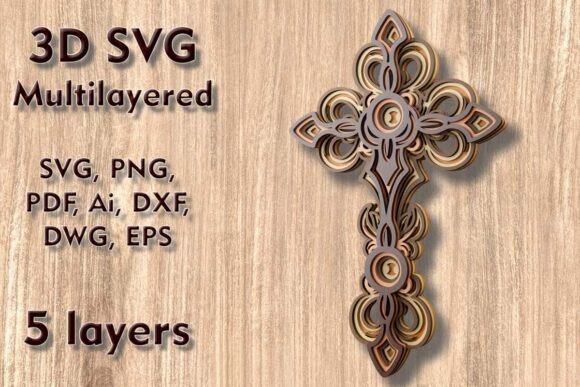
When a client approaches me with a request for a high-end, tactile holiday collection or a boutique religious gift line, my first instinct is to look beyond flat digital graphics. We live in an era where texture and depth define luxury. Recently, while scouting assets for a handmade business launching a seasonal campaign, I evaluated the Cross 3D SVG Multilayered Cutting Files. This isn't just another clipart download; it is a structural blueprint for physical creation. The immediate impression is one of solemn elegance and architectural precision. The design carries a weight that feels appropriate for commemorative items, church events, or premium home decor. It avoids the cheap, overly cartoonish aesthetic often found in mass-market religious graphics, opting instead for a layered approach that suggests craftsmanship.
Evaluating the Structural Integrity for Real Projects
The core specification of this asset—a base size of 250 x 160 mm (9.9 x 6.3 in)—immediately tells me this is intended for substantial applications. In my experience, many SVG files on creative marketplaces are too small to be useful without significant upscaling, which can ruin vector paths. However, this graphic design asset starts at a generous scale. The file includes five distinct layers, which is the sweet spot for creating a convincing 3D effect without making the assembly process a nightmare for the end-user or the production team.
For a designer working on packaging design or product mockups, these layers are gold. They allow us to visualize how light and shadow will play across the final object. If you are building a brand identity around faith-based values, using a multilayered cross as a central motif on packaging adds a level of perceived value that a flat print simply cannot achieve. The ability to easily increase the size means this could serve as a large focal point for a window display or a hero graphic on a website, provided the vector paths remain clean upon expansion.
Application Across Marketing and Merchandise
In terms of versatility, this file shines in specific niches. For Laser Cutting projects, particularly Ornaments, the layering allows for the insertion of contrasting materials—perhaps a gold foil layer sandwiched between two wooden tiers, or a translucent acrylic layer to catch light. This makes it ideal for Etsy product listings where uniqueness drives sales. Beyond physical cutting, I see strong potential for this asset in sublimation design. By separating the layers in your editing software, you can create a faux-3D effect on mugs, tote bags, or t-shirts, giving a print-on-demand seller a competitive edge in a saturated market.
For social media graphics and Pinterest pins, the depth of the design stops the scroll. When placed against a textured background in a Canva template, it creates an editorial look that elevates a simple blog post into a feature article. It works exceptionally well for editorial design in church bulletins or event invitations where a sense of tradition meets modern aesthetics. However, it is crucial to note that this is a decorative element. It functions best as a standalone icon or a central embellishment rather than a repeating pattern, which might become visually chaotic.
Strategic Limitations and Design Hierarchy
Every designer knows that not every asset fits every brief. While the Cross 3D SVG Multilayered Cutting Files are robust, they require careful handling regarding scale. The product notes wisely warn about reducing the design. Because the aesthetic relies on the separation of layers to create depth, shrinking the file too much can cause the thin elements to merge or disappear entirely, especially when cut from materials like wood or cardstock.
I would advise against using this in minimalist branding where ultra-clean lines and single-color simplicity are the goal. The complexity of five layers might clash with a very sparse visual hierarchy. Similarly, in crowded layouts or low-contrast designs, the intricate details of the layers could get lost. If you are designing for a corporate environment that requires strict, flat vector logos for favicon usage, this multilayered approach is likely too ornate. It thrives in environments where there is space to breathe—large layout areas, dedicated product photography, or as a featured accent on a flyer.
Technical Review and Pre-Production Checklist
Before handing this off to a client or sending it to production, there are several practical steps I always take. First, I test the file in black and white. A good SVG design should hold its form even without color coding the layers. This ensures that if a client wants a monochromatic wood finish, the cuts will still register correctly. Next, I check the contrast on both light and dark backgrounds. Since this is often used for commercial design, ensuring visibility across different marketing materials is key.
It is also vital to inspect the vector editability. Open the file in your preferred software and ensure that each of the five layers is on a separate group or layer. This allows for easy customization, such as changing the thickness of specific tiers or swapping out the middle layer for a different material in a product mockup. If you are using this for a Cricut project, verify that the "weld" or "attach" functions work smoothly with the imported paths.
Furthermore, compare the style of this cross with your existing typography. Does it pair well with a classic serif font for a traditional feel, or does it need a modern sans-serif to create contrast? The emotional appeal of this asset is one of reverence and quality; ensure your accompanying marketing visuals match that tone. Finally, and most importantly, review the licensing. Confirm that the commercial license covers the specific volume of production you intend, whether you are selling physical Ornaments or digital templates.
Final Verdict for Professional Use
The Cross 3D SVG Multilayered Cutting Files represent a solid investment for designers focusing on tangible goods and high-touch branding. It bridges the gap between digital convenience and physical artistry. For small business owners and crafters, it offers a shortcut to a professional-looking product without needing to model the geometry from scratch. The attention to layer count and initial sizing shows an understanding of the manufacturing process, which builds trust.
Ultimately, this asset succeeds because it respects the medium of laser cutting. It doesn't try to be everything to everyone; instead, it excels as a specialized tool for creating depth, shadow, and meaning in physical objects. Whether used for a limited-edition holiday run or a permanent fixture in a boutique's inventory, it delivers a polished, cohesive result that resonates with audiences looking for authenticity. Just remember to respect the minimum size constraints to maintain the integrity of those delicate, defining layers.